
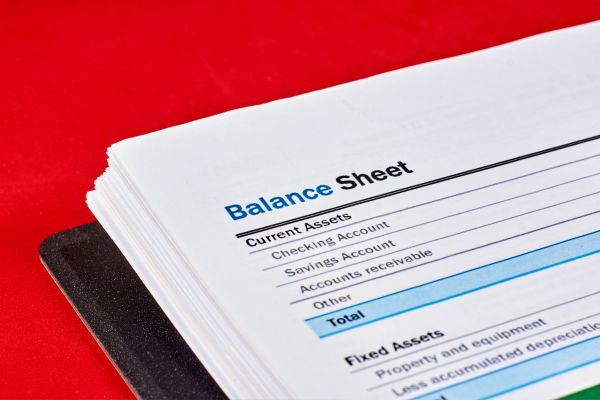
Financial statements often intimidate people at first glance. Rows of numbers, accounting terms, and carefully arranged categories can make even experienced professionals pause for a moment. Yet among all financial documents, the balance sheet holds a particularly important place because it reveals something simple but powerful: what a business owns, what it owes, and what remains after those obligations are accounted for.
For anyone trying to understand company finances, the phrase “balance sheet explained” usually marks the beginning of a much larger conversation about stability, risk, and long-term sustainability. Unlike profit-focused reports that measure performance over a period of time, a balance sheet captures a financial snapshot at a specific moment.
That distinction matters more than many people realize. A business may appear profitable on paper while quietly struggling with debt or cash shortages behind the scenes. The balance sheet helps reveal those deeper financial realities.
At its core, the document is not merely about accounting compliance. It tells a story about how a company operates, grows, borrows, invests, and survives.
Understanding the Purpose of a Balance Sheet
A balance sheet is one of the primary financial statements used in accounting and business reporting. It provides an overview of a company’s financial position at a particular date, showing the relationship between assets, liabilities, and equity.
The structure follows a fundamental accounting formula:
Assets = Liabilities + Equity
Assets = Liabilities + Equity
This equation forms the foundation of double-entry accounting systems used throughout modern finance. Everything a business owns must be financed either through borrowing or through owner investment and retained earnings.
What makes the balance sheet especially useful is its ability to show financial balance rather than just activity. It reflects accumulated decisions over time — investments made, debts incurred, profits retained, and resources acquired.
In many ways, it functions like a financial health check rather than a performance scoreboard.
Assets and What a Business Owns
Assets represent resources controlled by a business that are expected to provide future economic value. In simpler terms, assets are things a company owns or uses to operate and generate income.
Assets are usually divided into current and non-current categories.
Current assets are short-term resources expected to be converted into cash or used within one year. Cash itself sits at the top of this category, alongside accounts receivable, inventory, and short-term investments.
Cash is straightforward enough, but accounts receivable often confuse newcomers. These are amounts customers owe the business for products or services already delivered. While technically considered assets, receivables do not always guarantee immediate cash flow, which is why collection efficiency matters so much.
Inventory represents goods intended for sale or materials used in production. For retailers and manufacturers, inventory levels can reveal important operational patterns. Too much inventory may signal weak demand or overproduction. Too little may indicate supply problems or missed sales opportunities.
Non-current assets, meanwhile, are long-term resources intended to support the business over many years. Buildings, machinery, vehicles, patents, trademarks, and land all fall into this category.
These longer-term assets often shape a company’s operational identity. A manufacturing business, for example, may hold large investments in equipment, while a technology company may rely more heavily on intellectual property.
Liabilities and Financial Obligations
Liabilities represent what a business owes to outside parties. These obligations can include loans, unpaid bills, wages, taxes, and other financial commitments.
Like assets, liabilities are divided into current and long-term categories.
Current liabilities involve obligations due within one year. Accounts payable, short-term loans, accrued expenses, and upcoming tax payments commonly appear here.
Accounts payable are essentially the opposite of accounts receivable. Instead of customers owing the company money, the company owes suppliers or vendors for goods and services received.
Managing current liabilities carefully is critical because cash flow problems often emerge here first. A business may appear profitable overall while still struggling to meet short-term obligations.
Long-term liabilities extend beyond one year and typically include bank loans, mortgages, bonds, and lease obligations.
Debt itself is not automatically negative, despite how it is sometimes portrayed publicly. Many successful businesses use borrowing strategically to finance expansion, equipment purchases, or infrastructure development.
The key issue is whether liabilities remain manageable relative to income, cash flow, and asset value.
Equity and Ownership Value
Equity represents the residual value remaining after liabilities are subtracted from assets. In practical terms, it reflects ownership interest in the business.
For small businesses, equity may include owner contributions and retained profits. In corporations, equity often includes shareholder investments, retained earnings, and additional paid-in capital.
Retained earnings deserve special attention because they reflect accumulated profits kept within the company rather than distributed externally. Over time, strong retained earnings can signal operational stability and long-term financial discipline.
Equity also acts as a financial buffer. When businesses face losses or declining asset values, equity absorbs the impact before liabilities become affected.
Investors frequently examine equity levels carefully because they reveal how heavily a company depends on borrowed financing versus internally generated resources.
A company with very low equity relative to debt may appear financially vulnerable even if revenue looks strong temporarily.
Why the Balance Sheet Matters Beyond Accounting
One reason people search for “balance sheet explained” is that the document affects far more than accountants alone. Investors, lenders, business owners, regulators, and analysts all rely on balance sheets to evaluate financial stability.
Banks review balance sheets before approving loans. Investors examine them when assessing risk and valuation. Suppliers may even consider financial statements before extending credit terms.
Internally, balance sheets help management make operational decisions about spending, borrowing, hiring, and expansion.
The document also provides historical perspective. Comparing balance sheets across multiple years can reveal whether a business is strengthening financially or becoming increasingly dependent on debt.
Patterns matter more than isolated numbers.
A sudden increase in liabilities may indicate aggressive expansion. Rising cash reserves may suggest operational caution. Declining inventory could point to supply chain problems or changing consumer demand.
Financial interpretation always requires context.
Liquidity and Short-Term Financial Health
Liquidity refers to a company’s ability to meet short-term obligations using available current assets. It is one of the most important areas balance sheets help evaluate.
Businesses can fail even while technically profitable if they run out of accessible cash. Payroll, rent, supplier invoices, and loan payments still require immediate funding regardless of long-term profitability projections.
Financial analysts often use liquidity ratios derived from balance sheet data to measure short-term stability.
One common example is the current ratio:
\text{Current Ratio} = \frac{\text{Current Assets}}{\text{Current Liabilities}}
A higher current ratio generally indicates stronger short-term financial flexibility, though excessively high ratios may also suggest inefficient use of resources.
Liquidity analysis became especially important during periods of economic uncertainty, such as recessions or global disruptions, when access to cash suddenly became critical for survival.
The Relationship Between Balance Sheets and Profitability
A common misunderstanding is assuming that profitability automatically guarantees financial health. The balance sheet helps explain why that is not always true.
A company can report strong profits while carrying excessive debt, weak cash reserves, or declining asset quality. Conversely, some businesses operate with modest profits but maintain exceptionally stable balance sheets.
The balance sheet complements income statements rather than replacing them. One shows financial position; the other measures operational performance over time.
Together, they provide a fuller picture of how a business actually functions.
This relationship becomes particularly important in industries with heavy infrastructure costs or cyclical revenue patterns. Airlines, manufacturers, and construction companies often carry substantial assets and liabilities that require careful interpretation beyond headline profit numbers.
Intangible Assets and Modern Business Models
Modern balance sheets increasingly include intangible assets such as patents, trademarks, software, copyrights, and goodwill.
This shift reflects broader changes in the global economy. Many valuable companies today derive much of their worth from intellectual property rather than physical infrastructure alone.
Technology firms, media companies, and pharmaceutical businesses often hold enormous intangible asset values relative to traditional manufacturing firms.
Goodwill, specifically, emerges during acquisitions when one company purchases another for more than the fair value of identifiable net assets.
These intangible categories can make balance sheet interpretation more complex because their value may fluctuate significantly depending on market conditions, innovation cycles, or regulatory changes.
Not all assets are equally stable or easily measurable.
Reading a Balance Sheet More Thoughtfully
Numbers alone rarely tell the complete story. Balance sheets become more meaningful when viewed alongside industry conditions, economic trends, and operational realities.
For example, high inventory levels may concern investors in one industry but appear completely normal in another. Debt-heavy balance sheets may look risky during economic downturns yet manageable during growth periods with low borrowing costs.
Comparisons also matter. Analysts often compare companies within the same industry to evaluate relative efficiency, leverage, and liquidity.
Understanding a balance sheet requires interpretation, not just memorization of definitions.
That is partly why financial literacy takes time to develop. The numbers are only the starting point.
Conclusion
A balance sheet is more than a collection of accounting categories arranged into neat columns. It is a financial snapshot that reveals how a business supports itself, manages obligations, and builds long-term stability over time.
Understanding the relationship between assets, liabilities, and equity helps explain not only how businesses operate but also how financial risk and opportunity coexist within nearly every organization.
For those searching for a clear balance sheet explained guide, the most important realization is that the document reflects accumulated decisions rather than isolated transactions. Every loan, investment, purchase, and retained profit eventually shapes the broader financial picture.
While balance sheets may appear technical initially, they ultimately tell very human stories about growth, caution, ambition, uncertainty, and resilience inside the world of business and finance.